New Behavioural Treatments Are Changing Pain Management
By Jamie Bussin, featuring Dr. Eric Anderson
You’ve hurt yourself working out, or maybe you’ve had a slip-and-fall accident. Broken bones, bruises, abrasions, muscle pulls and tears are all examples of injuries that can result in significant acute pain. But according to neurologist Dr. Eric Anderson, chronic pain is different and is not necessarily caused by ongoing tissue damage. He says the brain and nervous system can learn pain patterns that perpetuate pain long after tissue has healed.
I discussed the nature of chronic pain and effective behavioural treatments with Dr. Anderson on Episode #438 of The Tonic Talk Show/Podcast. This article is a digest of that conversation.
What Is Behavioural Treatment for Chronic Pain?
According to Dr. Anderson, traditional pain treatment tends to focus on finding tissue damage and then fixing it.
“People typically get imaging, maybe an injection, maybe surgery, and if medication is involved, it’s usually aimed at dulling the signals generated by the nervous system,” he explained.
That approach often works well for acute injuries or short-term pain. However, for the tens of millions of people living with chronic or persistent pain, the structural model of identifying and treating a physical lesion frequently runs out of answers or proves incomplete.
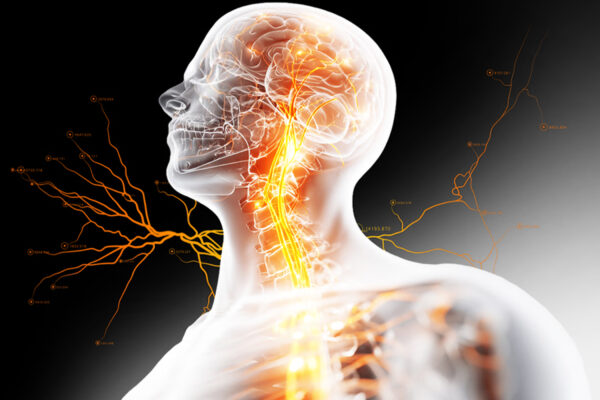
Behavioural treatment for chronic pain works from a different premise: that the experience of pain is largely generated and maintained by the brain and nervous system, not just by tissue or structural damage.
“The treatments we use, such as pain reprocessing therapy, cognitive behavioural therapy adapted for pain, and emotional awareness and expression therapy, are all designed to retrain the neural pathways that have learned to produce and amplify pain signals,” said Dr. Anderson.
How Does the Brain Create Chronic Pain?
When pain becomes chronic, the brain’s threat-detection system can become sensitized to external stimuli, causing pain-signalling circuits to overfire.
In the ICD-11 classification system, many chronic pain conditions are now categorized as “primary pain,” meaning the pain signal itself has become the problem rather than the underlying tissue damage. In effect, the nervous system learns to remain in pain.
“Pain is not just a report of damage; it’s a protective output generated by the brain based on its assessment of threat,” said Dr. Anderson.
What Is Central Sensitization?
Patients may experience central sensitization, a condition in which the brain and nervous system become overly sensitive and amplify pain signals.
According to Dr. Anderson, central sensitization is well documented in conditions ranging from back pain and migraines to fibromyalgia and irritable bowel syndrome.
The emotional and memory centres of the brain are heavily involved. Pain increasingly becomes linked to areas of the brain associated with emotional and contextual drivers. That is why stress, trauma history and psychological context can all measurably affect the intensity of pain people experience.
That is both good and bad news, according to Dr. Anderson.
“Because the brain has learned this pattern, it can also unlearn it. Neuroplasticity works in both directions, and I think that’s genuinely hopeful for people living with chronic pain.”
How Does Neuroplasticity Affect Pain?
Different therapeutic approaches can help modify neural circuitry.
Dr. Anderson explained how cognitive behavioural therapy works in the context of pain treatment:
“When we talk about psychotherapy, psychology, mental health and behavioural health, all these things tie into how we train the brain and body to recognize and reframe external cues so we can cope differently with certain signals. Over time, what previously affected you may affect you less, and in some cases no longer affect you at all.”
Can Chronic Pain Exist Without Tissue Damage?
People experiencing chronic pain commonly fall into a cycle of fear and inactivity. It is natural to rest and avoid activity when experiencing pain in order to allow the body to heal.
However, according to Dr. Anderson, the brain may interpret that avoidance as confirmation that movement itself is dangerous. As a result, the nervous system can become vigilant — even hypervigilant in some cases — sending signals the body interprets as pain. Those signals may worsen whenever the person attempts to resume activity.
What Is Pain Reprocessing Therapy?
Pain reprocessing therapy aims to break that cycle by helping the brain reinterpret pain signals.
“When people understand that what they’re experiencing is a sensitized nervous system rather than ongoing tissue damage, the fear response starts to loosen,” said Dr. Anderson. “That shift in appraisal is not just psychological comfort; it actually changes the threat level the brain assigns to those signals, and that changes the pain output the person experiences.”
Pain reprocessing therapy is supported by impressive clinical evidence, including a recent randomized trial from the University of Colorado in which 66 per cent of participants with chronic low-back pain became essentially pain-free at the end of treatment.
This type of therapy is highly individualized because fears and behavioural patterns differ from person to person. Some people become terrified of movement, while others fall into cycles of overexertion followed by crashes.
“Emotional awareness and expression therapy is another tool we use, and that helps patients whose pain is significantly driven by suppressed emotional stress,” said Dr. Anderson.
The goal of these therapies is to give the brain new information and new experiences so it can update its threat assessment. Once that happens, movement becomes possible again and physical deconditioning can begin to reverse.