A New Model For Sustainable Urban Agriculture
By Jamie Bussin, featuring Lubo (Lubomir) and Kubo (Jakub) Dzamba
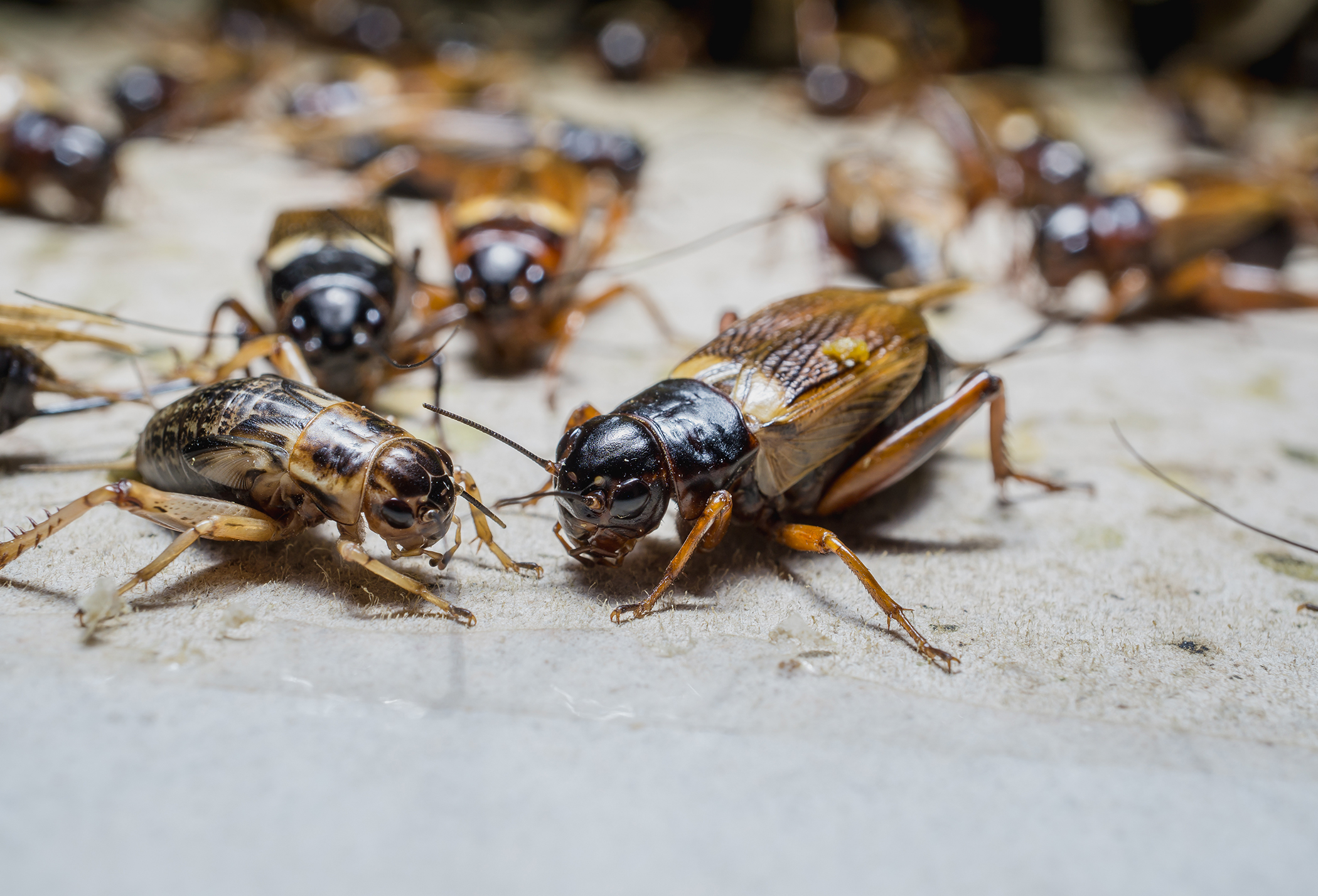
Most businesses are designed to solve a single problem. Mississauga-based Third Millennium Farming is trying to solve several. The company has demonstrated a single-ingredient circular system in which cricket frass fertilizes duckweed and duckweed feeds crickets, creating a closed-loop production cycle. The crickets are then processed into food products for human consumption, while the frass is used as a natural fertilizer, all within a relatively small urban footprint in the Greater Toronto Area.
I discussed the Dzambas’ urban agriculture business on Episode #440 of The Tonic Talk Show/Podcast. This article is a digest of that conversation.
How The Operation Started
The idea for the cricket farm started as an assignment for a course that Kubo was taking while completing his master’s degree in architecture . The challenge was to demonstrate how to grow a lot of food in a small urban space. While other students’ solutions focused on growing wine grapes or raising chickens, Kubo focused on the idea of feeding waste products to insects.
What is Closed-Loop Cricket Farming?
Closed-loop farming is an agricultural system where waste from one process becomes an input for another, reducing the need for external resources.
In this instance, the crickets grown on the farm create an output called frass, which is an organic fertilizer made from cricket droppings and exoskeletons, rich in nutrients and chitin, promoting plant growth, pest resistance, and soil health. The frass is used to farm duckweed, at almost commercial levels.
Why is duckweed important in circular agriculture?
Duckweed is a fast-growing aquatic plant used as animal feed and a source of protein.
The duckweed is then used, without additives, to feed the crickets, which in turn yields cricket production at nearly commercial levels -thereby closing the loop. By using the crickets, frass and duckweed without additives they reduce the overall footprint of the operation.
As Lubo says, “Reducing each input to one ingredient is what makes a true closed loop possible.”
Are crickets a sustainable source of protein?
According to Kubo, crickets are nutritionally similar to meat such as chicken, naturally having 20 per cent protein content analogous to any other meat. As part of their business they process the crickets by drying, and milling them into a powder, which increases the protein up to 70 per cent of protein.
What is chitin and why does it matter?
The cricket meal isn’t just a significant source of protein, but also contains chitin from the exoskeletons of the crickets. Chitin is a structural polysaccharide made from chains of modified glucose, specifically N-acetylglucosamine units. It’s found in the exoskeletons of other arthropods (insects and crustaceans), the cell walls of fungi and certain hard structures in invertebrates and fish.
Chitin has a strong prebiotic aspect to it, where it can increase the healthy gut microbiome bacteria. Says Lubo, “A prebiotic is a chemical which enters your stomach, is capable of fending off all the stomach acids, is capable of getting into your upper intestine, reacting with enzymes, and start fermenting during the journey through the upper intestine ferments enough that it becomes a food for your biome (in the lower intestine).”
How does cricket frass work as fertilizer?
The cricket frass also contains chitin. It acts as an extremely complex fertilizer and increases the nutrient extraction from soil. Chitin reacts with the soil microbiome which contains millions of bacteria. That reaction, according to Lubo, makes the nutrients in the soil more bioavailable to the situated plants. Says Lubo, “The chitin is a miracle in my opinion. Once you give it to the soil it will give more nutrients to the soil than under any other fertilized condition.”
Can insect farming reduce land use?
Let’s put protein production into context. Hunter-gatherer societies required roughly 2.8 square kilometres per person. That’s because wild food sources are spread out and relatively scarce.
Agricultural and livestock innovations dramatically reduced land requirements. Each major food-production “revolution” (farming, improved crops, animal husbandry, industrial agriculture, etc.) allowed humans to produce more food on less land. According to Lubo, many of these transitions reduced land needs by roughly a factor of 10.
For example, a broiler chicken represents a very efficient protein-production system. The land needed to support a person through modern chicken production is about 9.7 square metres.
If historical food revolutions repeatedly cut land use by about 90 per cent, then the next step should theoretically reduce it by another factor of 10. Lubo believes insects, especially crickets, may be the biological platform that enables that next leap in protein production efficiency because:
- They need very little space.
- They convert feed into protein efficiently.
- They can be raised vertically in urban environments.
- They can potentially fit into a closed-loop system with duckweed and frass.
Kubo agrees. “At that time (of his degree assignment) I hadn’t worked out the culinary aspect of the operation, but the amount of protein and nutrition being produced was like orders of magnitude more, like hundreds, even two or 3000 times more than conventional farming, and so that’s when I got interested in it.”
Conclusion
The work being done at Third Millennium Farming suggests that cricket farming may be more than an alternative protein source. By using cricket frass to fertilize duckweed and duckweed to feed crickets, the company is exploring whether food can be produced in a genuinely circular system with minimal external inputs. The approach combines urban agriculture, insect protein, soil biology, and nutrition into a model that challenges conventional assumptions about how food is grown.